
Electricity payments are part of everyday life for millions of Nigerian households and businesses. However, not everyone uses electricity in the same way.
Some customers use prepaid meters and purchase electricity units before consuming them, while others receive bills and pay after electricity has been supplied.
Understanding the difference between prepaid and postpaid electricity can help you manage your electricity expenses more effectively.

What Is a Prepaid Electricity Meter?
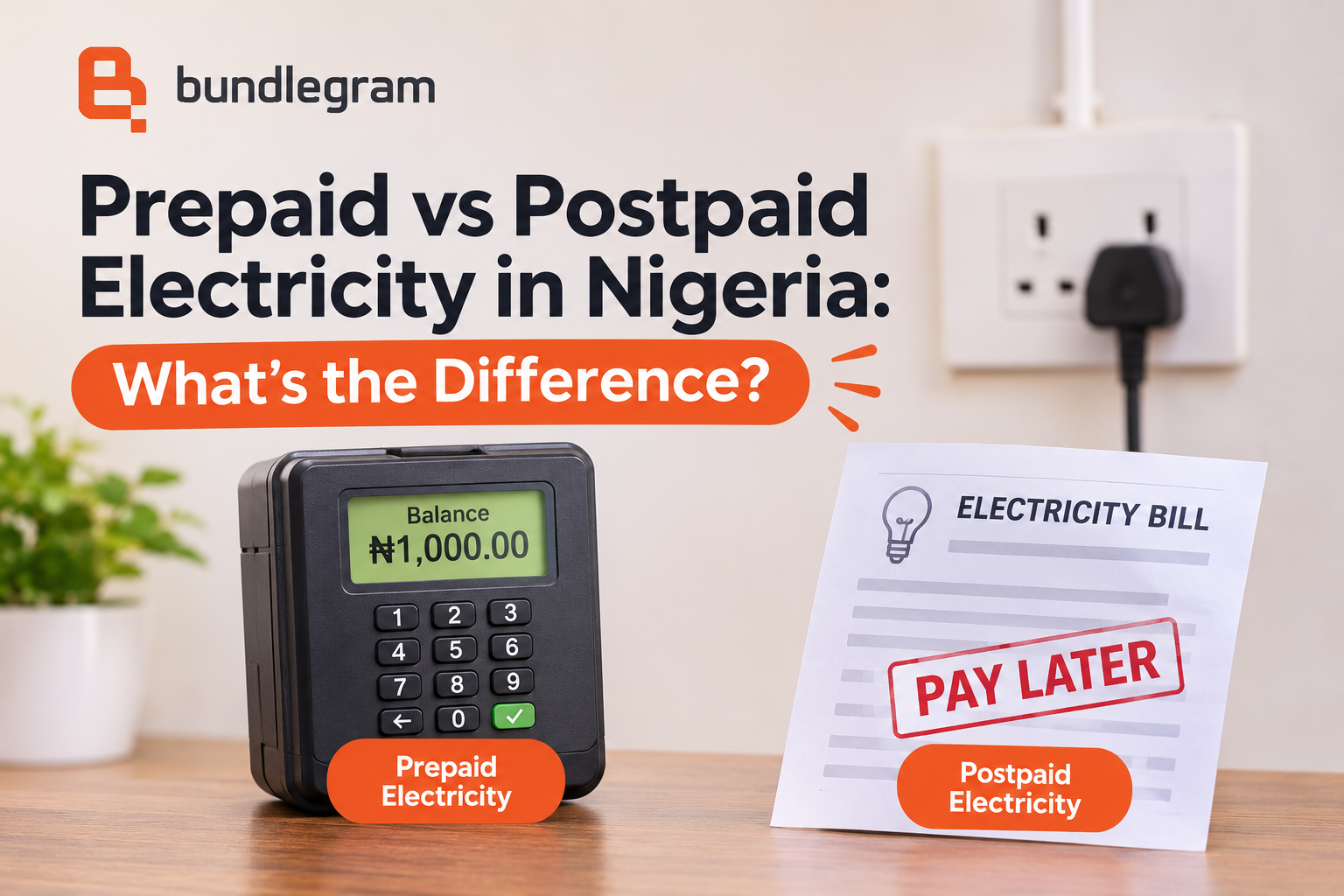
A prepaid meter allows you to purchase electricity units before using them.
After making a payment, you receive a token or recharge information that can be entered into your meter. The available units are then added to your meter balance.
It works similarly to buying airtime before making calls.
You pay first and consume the electricity afterwards.
What Is a Postpaid Electricity Meter?
A postpaid customer uses electricity during a billing period and receives a bill afterward.
Instead of purchasing units in advance, the customer pays based on the bill issued for the period.
The amount can depend on factors such as electricity consumption and the applicable billing arrangement.
Key Difference Between Prepaid and Postpaid
The biggest difference is when you pay.
With prepaid:
- You pay before consuming electricity.
- You purchase units in advance.
- Your meter balance reduces as electricity is consumed.
- You can monitor your remaining units.
With postpaid:
- You consume electricity first.
- You receive a bill afterwards.
- You pay according to the bill issued.
- Your electricity usage is reflected in the billing cycle.

Which One Gives You Better Control?
For people who want to closely monitor electricity spending, prepaid meters can provide a useful level of visibility.
You can see how many units remain and decide when to purchase additional units.
Postpaid customers may find the system more convenient if they prefer receiving a bill and paying according to their billing cycle.
Neither system is automatically better for everyone. Your circumstances, meter type, electricity provider, and household needs all matter.
How to Manage Electricity Costs More Effectively
Regardless of your meter type, reducing unnecessary electricity consumption can help.
Simple habits include:
- Switch off lights when rooms are not being used.
- Disconnect appliances that aren’t needed.
- Avoid leaving devices charging unnecessarily.
- Use energy-efficient bulbs where appropriate.
- Pay attention to appliances that consume significant electricity.
- Monitor your electricity usage regularly.
How Can You Pay Your Electricity Bill Online?
Digital payment platforms have made electricity payments more convenient.
Instead of visiting a physical payment location, customers can use online platforms that support electricity payments.
Bundlegram allows users to pay electricity bills through its platform, including payments associated with prepaid and postpaid electricity services.
This can be useful when you need to make a payment without leaving home or the office.
What Information Do You Need?
The exact information required can depend on your electricity provider and the type of payment you’re making.
Generally, you should have the relevant meter or customer information available before starting the transaction.
Always double-check the details you enter before confirming a payment.
Final Thoughts
The choice between prepaid and postpaid electricity isn’t simply about which one is cheaper.
It is also about how you prefer to manage your electricity consumption and payments.
Prepaid meters allow you to purchase units ahead of time and monitor your balance, while postpaid customers receive bills after consumption.
Whichever system you use, convenient digital payment options can make managing electricity payments much easier.